INGREDIENTS:
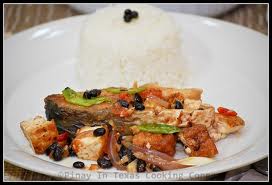
1 medium size milkfish cut into pieces squares tahure (fermented soy cake)
1 tbsp fermented black beans
1 tbsp garlic minced medium onion sliced1 big tomato diced1 small ginger sliced into stripsbunch of water spinach (kangkong)
1 tsp MSG
1/4 cup vinegar
1 tbsp soy sauce
3/4 cup water flour for dredging
Season milkfish with a little bit of salt. Dredge in flour.
Fry till golden brown. Set aside.
Saute garlic, onions, tomato and ginger.
Mix vinegar, black beans and soy cake together then mash.
Add the soy cake mix in the pan. Add water and soy sauce and let boil for a few minutes. Season with MSG then add in the fish and boil for a few minutes.
Add in the kangkong (water spinach). Check seasoning if it needs some adjustment. Turn off the heat when the kangkong turns bright green. Best eaten after a few hours from cooking. Enjoy!
Now that you have learned how to make totsong bangus (milkfish in fermented soy cake), please be sure to view these other seafood recipes. Also, you will love these Yummy Filipino recipes.
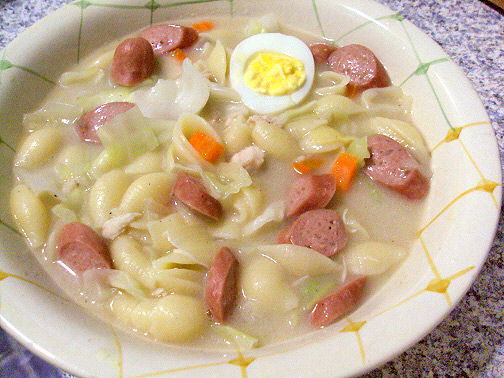
250 grams (about 9 ounces) shell pasta noodles uncooked
6 pcs hotdogs (chicken or beef, sausage in can can be an option) cut in chunks
2 cups cabbage shredded
1/4 cup unsalted butter
4 hard boiled eggs
10 cups water
1 cup chicken breast (cooked or raw) cut in cubes (other parts of chicken can be used, even with or without bone)
1 medium size onion diced
1 small can cream of mushroom soup
1 medium size carrots diced
salt and pepper to taste
(chicken noodle soup) is a traditional Filipino cuisine. This creamy chicken noodle soup is best served on rainy or cold season. Also, it can be served as any meal of the day.
This version of chicken noodle soup is more more creamy and delicious. Because we don’t have much time to cook, we wanted our chicken and noodle soup recipe to be fast and easy to prepare. I made my own version that is very simple and yet, it still brings out the warmth and comfort you’re looking for in a dish.
I’m sure you’ll find this is easy to make. It is definitely worth a try.
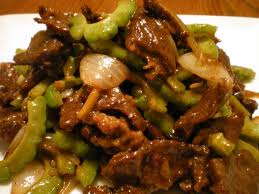
Ampalaya con Carne is a dish composed of beef strips and ampalaya – this is also known as beef with ampalaya. This is perfect for those who wish to eat ampalaya but cannot handle the bitterness. The beef acts as a neutralizing agent; it covers the bitterness with its flavorful juices.
I was one of those who dislike the bitterness of ampalaya. I only enjoyed eating it when I learned the proper technique of extracting the bitterness out (which I demonstrated in the Ginisang Ampalaya video). There is a negative side to it though; that means less nutrients since some of them are extracted too, but it is a good start to enjoy the vegetable.
Ampalaya con carne is a superb dish. If you do the right thing, the bitter flavor of the ampalaya will be unnoticed – all you can taste are the array of flavors brought about by the different ingredients. If you like beef with broccoli recipe, you’ll surely like this dish too.
Do you like eating ampalaya? What other techniques do you do to remove its bitter taste?
Ingredients:
1/2 lb beef sirloin, sliced into thin strips
1 large bitter gourd (ampalaya); cleaned and sliced
1/2 cup soy sauce
1 tablespoon sesame oil
1 medium-sized onion, thinly sliced lengthwise
1 small thumb ginger, julienned
6 cloves garlic, minced
1 tablespoon cornstarch
1/4 teaspoon salt
1/2 teaspoon ground black pepper
1 cup water or more if necessary
5 tablespoons cooking oil
1.Combine beef, soy sauce, salt, ground black pepper, cornstarch, and sesame oil. Mix all the ingredients until evenly distributed and marinade for at least 1 hour.
2.Heat a frying pan or wok and pour-in 3 tablespoons of cooking oil.
3.When the oil is hot enough, pan fry the marinated beef in medium heat until the outer part turns medium to dark brown (about 3 to 5 minutes per side).
4.Add water and simmer until the beef is tender.
5.Heat a separate pan or cooking pot then pour in the remaining 2 tablespoons of cooking oil.
6.When the oil is hot enough, sauté the garlic, onion, and ginger.
7.Add the sliced bitter gourd and stir fry for 5 minutes.
8.Turn off the heat and transfer to the pan with the tender beef. Stir and cook for 2 to 3 minutes more.
9.to a serving plate then serve.
10.Share and enjoy.
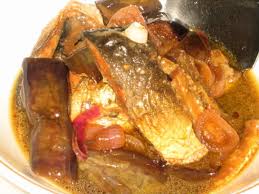
Ginataang Alimasag is a crab recipe cooked with coconut milk. The crab is often cut in half but can be cooked whole if desired. Squash or pumpkin can be used, but in this recipe we are using string beans only. This Filipino Recipe is excellent served with rice.
Ingredients:
3,4 pcs. large crab (alimasag) washed and cut in half
1/2 bundle string beans cut approximately 3 inches in length
1 thumb size ginger diced
1 medium onion sliced
5 cloves garlic minced
3 jalapeno pepper
1 large can coconut milk
3-5 tbsp. fish sauce
a dash of pepper
1/2 cup water
Ginataang Alimasag Cooking Instructions:
In a wok, pour coconut milk. Add onion, garlic, and ginger. Bring to boil.
Add jalapeno pepper, string beans, and crab. Pour in water and mix well.
Season with fish sauce, a dash of pepper. Cover and simmer over medium low heat until coconut milk blends with crab and veggies are tender.
1/2 kilo chicken, Choice Cuts Chicken Leg
4 pieces potatoes, peeled and sliced into wedges
1 red onion, diced
1 head garlic, minced
2 pcs bell pepper, small sized and sliced
1/4 kilo carrots, sliced
1 1/4 cups chicken broth or stock
2 pieces dried bay leaves
1 cup tomato sauce
2 tablespoons of patis (fish sauce)
3 tablespoons of Olive Oil or Cooking oil
salt and pepper to taste
In a large thick bottomed pot or large bottom frying pan, heat Olive oil or Cooking Oil.
Fry the Chicken in batches until slightly brown.
Then Saute’ garlic and onions.
Pour the tomato sauce and stock then add the Bay leaves.
Bring to a boil and allow to simmer for 20 minutes or until the chicken is almost cooked.
Add potatoes and continue to cook for 10 minutes or until the potatoes are cooked.
Add the Carrots and bell peppers, simmer for an additional minute or two.
Pour the Patis or Fish Sauce then add Salt and pepper to taste
Remove the Bay leaves after cooking.
Serve hot with rice.
1 Kilo Pork Belly (Liempo) cubed
2 tablespoon corn oil
6 cloves garlic, chopped
1 white onion, minced
5 small tomatoes, chopped
1/2 cup shrimp paste (Bagoong)
3 tablespoon cane vinegar
1 1/2 teaspoon sugar
3 eggplants, sliced diagonally
1/2 cup coconut cream
salt and pepper to taste
Cooking Instruction :
Place cubed liempo in a stockpot. Cover with water and let boil for at least 15 minutes. Prepare the rest of the ingredients while meat is cooking.
Pour corn oil into a hot pan. Saute garlic and onions until softened. Add tomatoes and cook until softened too. Stir fry bagoong until aromatic then put in the boiled pork pieces and 1/2 cup of boiling water used to cook the pork.
Simmer until pork softens, then add vinegar and sugar then season with salt and pepper to taste. Adding pork broth is optional.
When pork is fork tender, add sliced eggplants and coconut cream. Bring to a boil and simmer until mixture thickens and eggplants are soft, about 10 minutes then serve with steamed rice.
The cooking time is dependent on the size of the pork cubes if you want to cook it faster, make sure to cut the pork cube smaller than the regular size.
1. Heat oil in a skillet, fry the diced potato. Set aside.
2. Saute the garlic and onion until fragrant.
3. Add the fried potato.
4. Then the corned beef. Stir fry for 2-3 minutes.
5. Add the water (amount according to your preference).
6. Add salt to taste.
7. Serve with steamed rice.
TOTSONG BANGUS-2. Ingredients: 1 bangus cut into pieces. 1 tbsp chopped garlic. 2 medium tomatoes sliced. 1 onion sliced. sliced ginger ...TOTSONG BANGUS AT TOKWA IN BLACK BEAN CREAM. TOTSONG BANGUS AT TOKWA IN BLACK BEAN CREAM Prep time: 15 minutes. Cooking time:16
ngredients:
1 bangus cut into pieces
1 tbsp chopped garlic
2 medium tomatoes sliced
1 onion sliced
sliced ginger
bunch of pechay
3 tbs fermented black beans
1/3 cup vinegar
2 tbsp soy sauce
1 tsp msg
flour
salt and pepper
tofu fried (optional)
salt and pepper fish..dredge in flour and fry until golden brown. You may fry the tofu or mashed together with vinegar to make a thick sauce.
Saute garlic,onion,ginger,tomatoes until soft ,about 5 minutes.
Add vinegar,soysauce,blackbeans, and waterLlet boil in low fire for 10 minutes.Check seasoning and add bangus and fried tofu.Cover and cook for another 10 minutes.
Chicken Arroz Caldo Ingredients • 4 chicken thighs or drumsticks • 2 cups of sticky rice (uncooked) • 1 qt of chicken stock (fat free, sodium free)Arroz Caldo Filipino food recipe is a ginger flavored rice-chicken soup delicacy, traditionally a good food for the sick.
Arroz Caldo Recipe, makes 6 servings
1 tablespoon vegetable oil
3 garlic cloves, peeled and finely chopped
1 1-inch piece of ginger, peeled and finely chopped, about 1/2 tablespoon
1 small onion, chopped, about 1/3 cup
pinch of saffron
6 chicken wings, or 1 large boneless chicken breast, cut into 1-inch pieces
1 cup short-grain rice
4 cups chicken stock
2 tablespoons fish sauce
3 hard-boiled eggs, sliced for garnish
2 spring onions, thinly sliced for garnish
3 calamansi or limes
Sauté the garlic in oil in a medium saucepan over medium heat and cook until golden brown, about 2 minutes. Transfer the garlic to a paper towel-lined plate to drain and set aside. Add the ginger, onion, and saffron and cook until the onion is translucent, about 3 minutes. Add the chicken and brown for about 5 minutes. Add the rice, chicken stock, and fish sauce, cover the pan, and simmer over medium to low heat. Stir frequently and simmer until the chicken and rice are cooked through, about 25 to 30 minutes.
Ladle the arroz caldo into bowls and serve with bowls of hard-boiled egg, spring onion, fried garlic, calamansi and fish sauce on the side.
Cooking Notes
1. This recipe makes a fairly thick rice porridge, which I love. For a thinner arroz caldo add more cups of chicken stock. My mom and I both use short-grain rice but she sometimes uses sticky or glutinous rice to make a thicker porridge.
2. When reheating, add some chicken stock or water to the porridge and warm over medium heat.
3. For the more adventurous, tripe can be used instead of chicken.
Arroz Caldo - Filipino Congee Recipe. Total comfort food and perfect for a loved one with a cold. Arroz Caldo..FILIPINO ARROZ CALDO RECIPE. ARROZ CALDO INGREDIENTS 1 1/2 cups rice 1 chicken, small, cut into serving pieces 2 tbsp oil.
Ingredients:
1 kilo chicken; cut in small pieces
1 cup uncooked malagkit or plain rice or combination
1 small onion; chopped
4 cloves garlic; chopped
1 root ginger; sliced
6 cups water or broth
Fish sauce
Cooking oil
Salt to taste (optional)
Chicken bouillon cubes (optional)
1 tablespoon minced fried garlic (for garnishing)
1 tablespoon scallions (for garnishing)
Cooking Instructions:
In a casserole, sauté garlic, onion, and ginger in oil. Add chicken and stir fry with fish sauce until light browned. Drain any remaining oil and then add rice. Add enough water and bring to boil. Continue cooking, stirring occasionally, until chicken is tender and rice is done (add hot water if necessary). Season with fish sauce according to taste. Serve hot in a bowl. Garnish on top with fried minced garlic and scallions.
Arroz Caldo Cooking Tip:
Always dry chicken well with paper towels before placing into hot pan or casserole so it won't stick.
You have the option of using salt or chicken bouillon cubes as seasoning instead of fish sauce.
Episode 12. VALLEJO VETERANS, Chicken Patatim.Sotanghon with Langka and Seafood Curry.Totsong Bangus and Tokwa in Black Bean Cream.
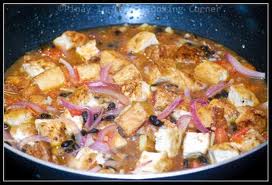
TOTSONG BANGUS AT TOKWA IN BLACK BEAN CREAM. TOTSONG BANGUS AT TOKWA IN BLACK BEAN CREAM Prep time: 15 minutes. Cooking time: 16 minutes.
Ingredients:
1 whole fish, cleaned and cut into serving pieces
2 pcs roma tomatoes, diced
½ cup canned black beans
2 pcs firm tofu, fried and cubed
1 medium-sized onion, sliced
6 cloves garlic, minced
1 thumb-sized ginger, julienned
2 Tbsp oyster sauce
Flour for dredging
Salt & pepper
Vegetable oil for frying
½ cup water (you can add more water if you want more sauce)
TOTSONG BANGUS AT TOKWA IN BLACK BEAN CREAM. TOTSONG BANGUS AT TOKWA IN BLACK BEAN CREAM Prep time: 15 minutes. Cooking time:
Totso is one of popular everyday recipe in the Philippines which are chinese in origin, Basically it consist of salted black beans, Tokwa..
Ingredient:
1 kg Bangus salted, cut diagonally and fry
2 cup cooking oil
2 tbsp og garlic, minced
1 pc onion, slice
1/4 tbsp gound pepper
5 pcs of tokwa,cut into square and fry
1-2 cups of water
3 tbsp taosi or tahure (fermented blackbeans)
1/4 cup vinegar
1 bunch of kintsay, cut into small pc
1/2 cup cornstarchdissole in water
1 small vetsin (monosodium glutamate)
Procedure of cooking for totso bangus
In a heat pan with oil, sautee garlica and add taosi. Simmer and constantly mixing to softened taosi, smash taosi using ladle. Add water and vinegar let it boil for a while, simmer again. Salt to taste, add fried bangus fish and fried tokwa, boil and dissolve to thickened. Lastly add kintsay and vetsin.
Served in totso recipe in a platter with hot steam rice
fresh pork ham roast (or boneless shoulder picnic roast, a hog's head, or any parts of pork.A Pinoy Recipe My All Favorite Filipino Recipes.
Mabuhay, to our Filipino Food Recipes Mabuhay (ma-boo-high) means welcome in Tagalog, the Filipino, or Pilipino.Pork Siomai Recipe BBQ Pork Chops Lechon (Spit Roast) "Fiesta version" 3 to 4-pound pork shoulder, with skin.
Ingredients:
1 to 2 kilos of pork (you can choose the shoulder or the leg part)
2 tablespoons of rock salt
1 bottle of soda drink (7-up or Sprite)
1 big onion peeled
1 ginger pounded
2 liters of water
some cooking oil for frying
Procedure:
Start by cleaning the pork. Do not cut them. It is preferable you choose pork without bones and with some fat on it. Put the cleaned pork on a deep casserole (like crock pot or pressure cooker), put the rock salt, ginger, onion and pour the soda drink and the water. Cover this and let this cook for at least two hours (for normal casserole and an hour for pressure cooker) at a medium fire. Cook until the pork becomes tender. You can keep the broth for further cooking like; pancit or mami noodle soup. Drain well the pork. It is highly recommended to cook them the next fry them the next day. In a frying pan, pour your cooking oil, as on as the oil is very hot put the pork cover it. Let it cook for about ten minutes each side or until it is golden brown. You can serve this with a spicy vinegar or lechon sarsa.
fresh pork ham roast (or boneless shoulder picnic roast, a hog's head, or any parts of pork.A Pinoy Recipe My All Favorite Filipino Recipes.
Once you have boiled and dried/refrigerated the pork liempo, see Part I here, then the question is, what do you want next, Lechon Kawali or Bagnet? This is how I understand the difference, and please, please, any Ilocanos out there, correct me if I am wrong, as I can definitely be wrong on this… If you want Lechon Kawali, you literally heat up oil in a kawali (or wok, pan, pot) and when the oil is hot, add the pre-boiled pork (remove from the fridge an hour before you are going to cook it to warm it up to room temperature) and hope you don’t get hit by any of the fat splattering like mini-missiles of pain. Cook this at high heat for say 12-15 minutes until the skin is crisp and it is a nice golden honey color. It should be removed from the fat, allowed to rest for a few minutes and chopped up into bite sized pieces. Essentially, once chopped up, you should have crispy bits of skin and caramelized bits of meat/fat/skin AND a more juicy fatty pork in the interior of the hunk of pork. This is served with either some lechon sauce or any combination of sawsawans that your heart desires.
The key here is the beautiful “blistering” of the pork fat that borders on the miraculous as the pale unappetizing chilled lardy mass is transformed into a beautifully burnished, crisp and totally appetizing result just minutes later. While this is almost certainly one of the worst culprits for clogged human arteries, it is almost certainly one of the yummiest ways to achieve them. I like my lechon kawali served with homemade acharra on the side and LOTS and LOTS of rice please.
Now if you want Bagnet instead, you take the same pork and have it warm up on the kitchen counter, then you fry it completely submerged in hot fat but at a low heat, with the fat just barely gurgling around the meat. You fry this mass for a good 45-60 minutes until it is a gorageous deep caramel color (but not burned), and oddly, the splattering has gone down to a minimum. I take this latter characteristic to mean there is little moisture left and essentially what you have is a big fat meaty chicharon of sorts. I did my version in a deep fryer (with the cover) and it was a total breeze; the results in the photos speak for themselves.
BUT, I must relate that these little Bagnets cost me about PHP4,000 to make, almost more than the price of Kobe Beef… why? Becuase the (110V) heat requirements of the deep fryer burned out two adapters and fried an expensive AVR (Automatic Voltage Regulator) Yikes! I thought I was going to burn down the house. There is an old Chinese tale that goes something like this: a man left his pig in a house in China and the house caught fire and the next day he returned to shift through the remnants and he found the first roasted pig ever. Can you imagine if the headlines on Cooking Daily screamed “Marketman burns down the house with his Bagnet experiments.
Hahaha. I can laugh about it now. But I think I need an electrician to change my plug so that I won’t need an adaptor to get it into the wall socket. But back to the bagnet. Once it has deep-fried for an hour or so, take it out and let it cool. This is the form in which most folks most commonly buy the bagnet at Ilocos markets or occasionally, Manila specialty food vendors. I just saw some hours ago at a trade fair and they didn’t look half as good as the ones freshly cooked in these photos here. And they weren’t even crisp anymore as they had been driven down from Ilocos in chilled coolers. In this state, the bagnet will apparently keep roughly 3-4 weeks in your refrigerator, or longer in your freezer.
To serve your bagnet, heat up the oil YET AGAIN, and chop your bagnet into smaller bite-sized pieces and re-fry them for a few minutes to crisp them up. There are those that would argue that the result is utterly sublime… I certainly would if it were freshly made and freshly fried and in the first photo up top. It was excellent. But there are detractors who would argue that it CAN taste a little stale and dry, almost like tasteless fried cardboard or something… and I can also buy that argument if the bagnet is too old and poorly fried, etc. We tasted bagnet all over Ilocos Sur and Ilocos Norte and the samples ranged from delicious to forgetable, just in case you wondered if there was a lot of variation. In Ilocos, htis is served with a side dish of KBL (Kamatis, Bagoong, Lasona or chopped tomatoes, fish sauce and onions). So what do you guys prefer? The one fry version with a little bit of juiciness in Lechon Kawali, or the double fried and crisper version better known as Bagnet? Oh and one last thing, the pork cooked with spices BEAT OUT the just salted version by a significant margin.Enjoy the photos, and I have checked myself into the Heart Center for artery de-clogging after 3 kilos of homemade lechon kawali and bagnet. I could but I won’t make this for this year’s Christmas giveaways.:)
fresh pork ham roast or boneless shoulder picnic roast, a hog's head, or any parts of pork.A Pinoy Recipe My All Favorite Filipino Recipes.
Ingredients:
olive oil
small onion, minced
4 garlic cloves, minced
2 cans of Liver pate
1/2 cup vinegar
5 tbs brown sugar
1/2 cup bread crumbs
pepper
Procedure:
1. oil heat in a sauce pan.
2. Saute garlic and onions.
3. Add liver pate, vinegar, and sugar. Adjust taste (some vinegar can be more acidic than others so add a little bit of water and more sugar if needed). Simmer for 2 minutes.
4. Add bread crumbs and simmer for 5 minutes.
5. Transfer mixture to a blender and blend smooth.
arroz caldo topped with crispy flaked chicken, chicken chicharrones, crispy fried.Arroz caldo is so yummy and the best ever comfort food.
Arroz Caldo 2
rice
4 to 5 cups hot well-seasoned chicken stock
1 to 2 teaspoons dried safflower (kasubha)
2 tablespoons light olive oil
4 garlic cloves, finely minced
1 inch piece ginger, peeled and finely grated
2 shallots, thinly sliced
¾ cup Japanese medium grain rice
1 tablespoon fish extract, or to taste
"toppings"
chicken or pork chicharrones
crispy flaked chicken or floss
fried shaved garlic, optional
fried scallions, optional
calamansi or lemon juice
Sprinkle safflower on hot stock; set aside. In a large saucepan, heat oil over medium high. Add garlic, onions, and ginger and saute for 2 minutes. Add rice and fish extract and stir fry for 2 minutes. Add 4 cups of the stock all at once, let come to a boil, lower heat, cover, and let simmer for 25 minutes. Check and add more stock if necessary. Ladle into individual bowls. Add toppings. Enjoy your eat.
arroz caldo topped with crispy flaked chicken, chicken chicharrones, crispy fried.Arroz caldo is so yummy and the best ever comfort food
This month's theme for the Kulinarya Cooking Club is the well-loved classic Filipino Arroz Caldo.
Since I have already posted an Arroz Caldo recipe sometime July this year (see: Arroz Caldo) , I decided to add a bit of twist to the original. And that's no other than adding crispy adobo flakes.
I have some left over chicken adobo from yesterday, or shall I say I reserved half part of it hehehe since I've been thinking of putting some for today's arroz caldo. I would want to come up with something different coz this is my very first Kulinarya entry. I want everybody to like it, as much as me and the whole gang (meaning: my family) loved it.
The adobo flakes gave a nice flavor on it, as what i have imagined it.
Today's arroz caldo is so perfect, so comforting. The sun is up outside, but the wind is really chilly. Grrr! lamig! But nevertheless, this is a food that you can eat any season, anytime of the day. Enjoy.
Ingredients:
1 1/2 cup uncooked rice (or 1 cup ordinary rice + 1/2 cup glutinous rice), washed and drained
3 cups chicken adobo flakes
3 tbsp cooking oil
10 cloves garlic, peeled and chopped
2 thumb-sized ginger, chopped
1 tsp kasubha (safflower)
8-10 cups chicken broth
fish sauce, to taste
ground black pepper, to taste
hard-boiled eggs
spring onions, chopped
How to prepare:
Over low heat, toast the garlic in a pot. We want it nice golden brown. When done, remove the garlic from the pot. Set aside.
On the same pot, same oil, let the adobo flakes turn into our desired crispy flakes (but not burnt) so keep on stirring for about 5 minutes. Remove the chicken flakes when done. Set aside.
On the same pot and same oil , saute ginger. Add rice, kasubha and chicken broth. Cover and let cook over medium heat.
When it boils, lower heat. Stir and season with fish sauce. Let simmer for about 15 minutes, but stir once in a while to keep rice from sticking on the pot.
Best served when hot. Top with eggs, spring onion, toasted garlic and adobo flakes.
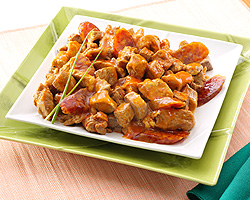
1/2 kg pork pigue or kasim, cubed
1/4 kg pork liver, cubed
2 tbsp MAGGI Savor Calamansi
1 8g MAGGI MAGIC SARAP
2 tbsp oil
1 tbsp crushed garlic
1/4 cup chopped onion
1 cup tomato sauce
1/2 cup water
1/2 cup sliced Chinese chorizo
Cooking Instructions:
Marinate pork and liver in MAGGI Savor and MAGGI MAGIC SARAP for at least 30 minutes.
Heat oil and saute garlic and onions until limp.
Add in tomato sauce and cook for 1 minute.
Stir in pork and liver and cook for 10 minutes or until tender.
Stir in water, chinese chorizo and raisins, simmer for another 10 minutes or until sauce has thickened.
Mix all the dry ingredients
Coat the pork chops onto the powder mixture
Heat some cooking oil into your skillet
Fry the coated pork chops until golden brown
Serve with your favorite side dish


.jpg)

.jpg)


.jpg)



.jpg)